

In 2020, COVID triggered the most volatile year for the dairy market in recent memory, subsequently followed by five additional years of market uncertainty. As 2026 begins to unfold, it’s fair to wonder if 2026 is going to continue the trends of 2025 and what the implications may be for your operation.
2025 Prices Fell Off as the Year Progressed
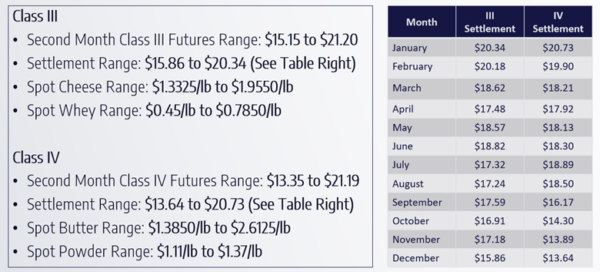
Let’s start with a look at the 2025 price ranges of some of the most important dairy markets:
Source for data above: Barchart & USDA
With the exception of whey, dairy markets posted the high-end movement of their ranges in the early part of the year. The second month Class III futures gave up more than $5.00 after January, and its Class IV counterpart gave up more of that in just the last five months of the year. Spot cheese spent most of 2025 between $1.60/lb and $1.90/lb before dropping down below $1.40/lb in early December. Spot butter gave U.S. the most dramatic move, giving back a whopping 46% of its value between July and the end of the year.
A Record-Setting Year for Dairy Production
As we’ve discussed in previous Insights, most of the decline in 2025 prices originates from oversupply of all things dairy. Notably per the USDA, the U.S. dairy industry in 2025 delivered all-time production highs in milk, cheese, and butter as shown in the charts below:
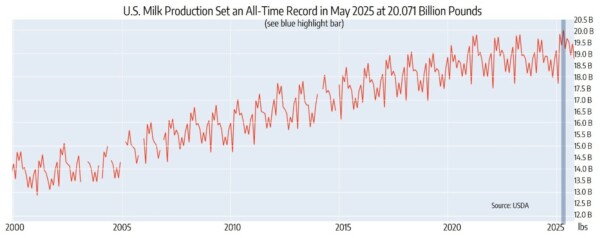
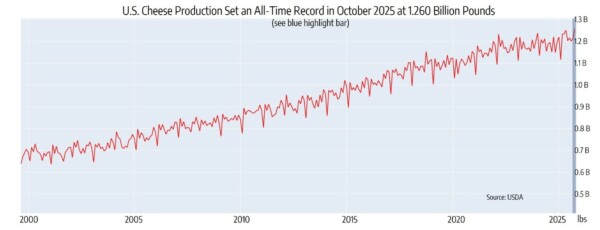
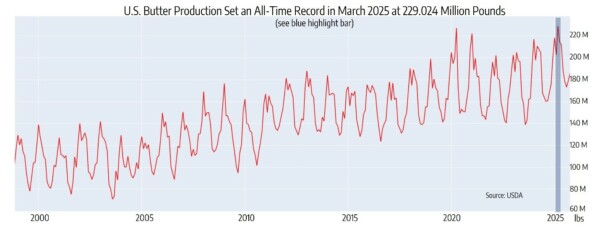
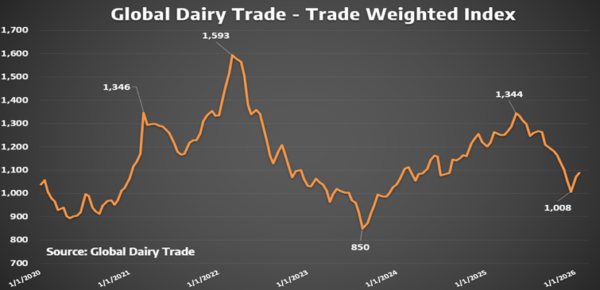
Moreover, it’s not just the U.S. dairy market contributing to an oversupply. As shown in the chart below, global production as a whole rebounded through much of 2025.
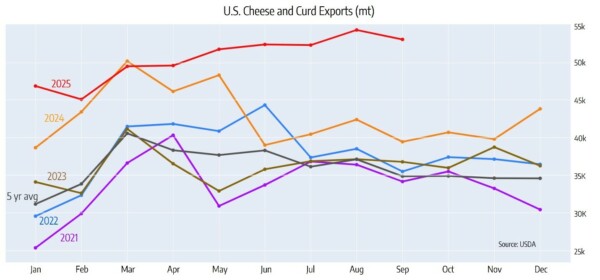
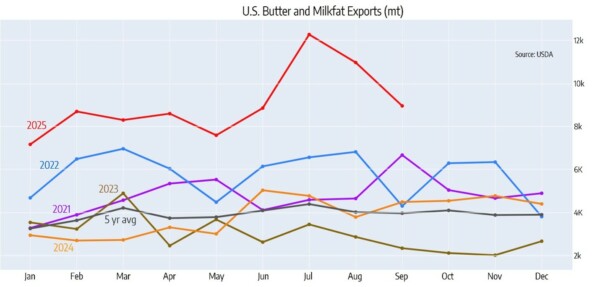
On a bright note, cheese exports hit new highs and butter performed better than it has in the past 30 years, as detailed in the following two charts. Due to the jump in production numbers, however, the positive effect of these higher exports on market prices was somewhat muted.
Record Herd Size Has Led to Increased Milk Production
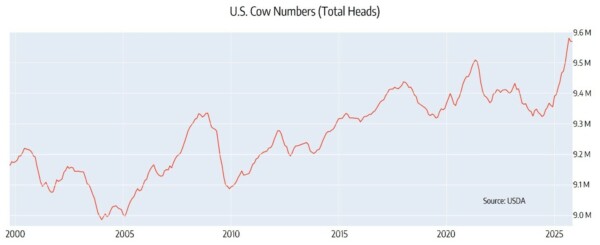
A major talking point over the past year has been the dairy cow herd size, which peaked in September at 9.581 million head. Three factors appear to have impacted this record herd size:
- The year 2025 was particularly characterized by the difficulty and expense of acquiring replacements, causing many producers to hang on to cows longer than they normally would have.
- 25% of the herd is estimated to be beef-on-dairy now, further reducing dairy heifers.
- Feed has been cheaper in the last 18 months compared to previous years, slowing down typical bias toward cutting herd size.
What to Keep an Eye on in 2026
As we step further into 2026, we believe it is unlikely that we will see a contraction in dairy production. There is some $11 billion in new dairy processing capacity expected to come online through 2028*, especially for cheese plants and higher-protein dairy products. We expect production to keep up with new processing demand.
With that in mind, here are themes we anticipate taking shape in 2026 with the potential to impact your bottom line:
- A peak in dairy cow herd size
The dairy cow herd was down ever so slightly in October and November from the September peak, and the U.S. dairy cow slaughter picked up pace into the end of 2025. As many cows milk longer than they would have in the past, might we see a bubble bursting as more aged cows reduce or stop producing milk? Will beef prices top and move lower, causing an influx of cull cows being moved before prices drop too much after a peak?
- A bottom of milk prices, possibly this spring
From a seasonal standpoint, Q1 is historically the worst-performing quarter for milk, followed by Q2. However, history shows that Q2 can be the turnaround quarter where Q1 action has been weak. With the recent weakness in milk prices, looking to the spring for a seasonal bottom makes sense, though it will take some shifts in the market fundamentals.
- Potentially higher feed prices
For the most part, the last year and a half has been friendlier to dairy producers when it comes to buying feed. Who’s to say if this will continue, given annual weather risks and potential shifts in planted acreage?
Marketing Planning – Your Best Course of Action
Once again, volatility breeds uncertainty and opportunity. While the window for covering the now weak milk prices has passed, producers still need to have a plan for the rest of 2026 and beyond for risk management. With low feed and fuel prices and record high cattle prices, now is the time to manage risk on inputs. At TFM360, we have spent decades helping dairy farmers like you manage risk in good times and bad. Give us a call to discuss your situation and how you can take action in this new year.
Do you have questions about expectations, market reactions, or our recommendations? We’re here to help.
Give Total Farm Marketing a call at 800.334.9779 to discuss your situation and how we can help you in your marketing decisions.
©February 2026. Total Farm Marketing. Futures and options trading involve significant risk of loss and may not be suitable for everyone. Therefore, carefully consider whether such trading is suitable for you in light of your financial condition. No representation is being made that scenario planning, strategy or discipline will guarantee success or profits. Examples of seasonal price moves or extreme market conditions are not meant to imply that such moves or conditions are common occurrences or likely to occur. Futures prices may have already factored in the seasonal aspects of supply and demand. The data contained herein is believed to be drawn from reliable sources but cannot be guaranteed. Reproduction of this information without prior written permission is prohibited. This material has been prepared by a sales or trading employee or agent of Total Farm Marketing and is, or is in the nature of, a solicitation. Any decisions you may make to buy, sell or hold a futures or options position on such research are entirely your own and not in any way deemed to be endorsed by or attributed to Total Farm Marketing. Total Farm Marketing refers to Stewart-Peterson Group Inc., Stewart-Peterson Inc., and SP Risk Services LLC. Stewart-Peterson Group Inc. is registered with the Commodity Futures Trading Commission (CFTC) as an introducing broker and is a member of National Futures Association. Stewart-Peterson Inc. is a publishing company. SP Risk Services LLC is an insurance agency and an equal opportunity provider. A customer may have relationships with any of the three companies.
Author

Dustin Jonasson